Pillar 03 · Bespoke software design

The software conforms.
Not your operation.

You start with a platform that already solves most of your industry's problems — built by our team alongside experts who've worked operations like yours. Then our software engineers adapt it to fit your operation. Custom fields, custom workflows, custom KPIs, custom integrations. The way you want to solve your problems gets written into the software, and stays there.

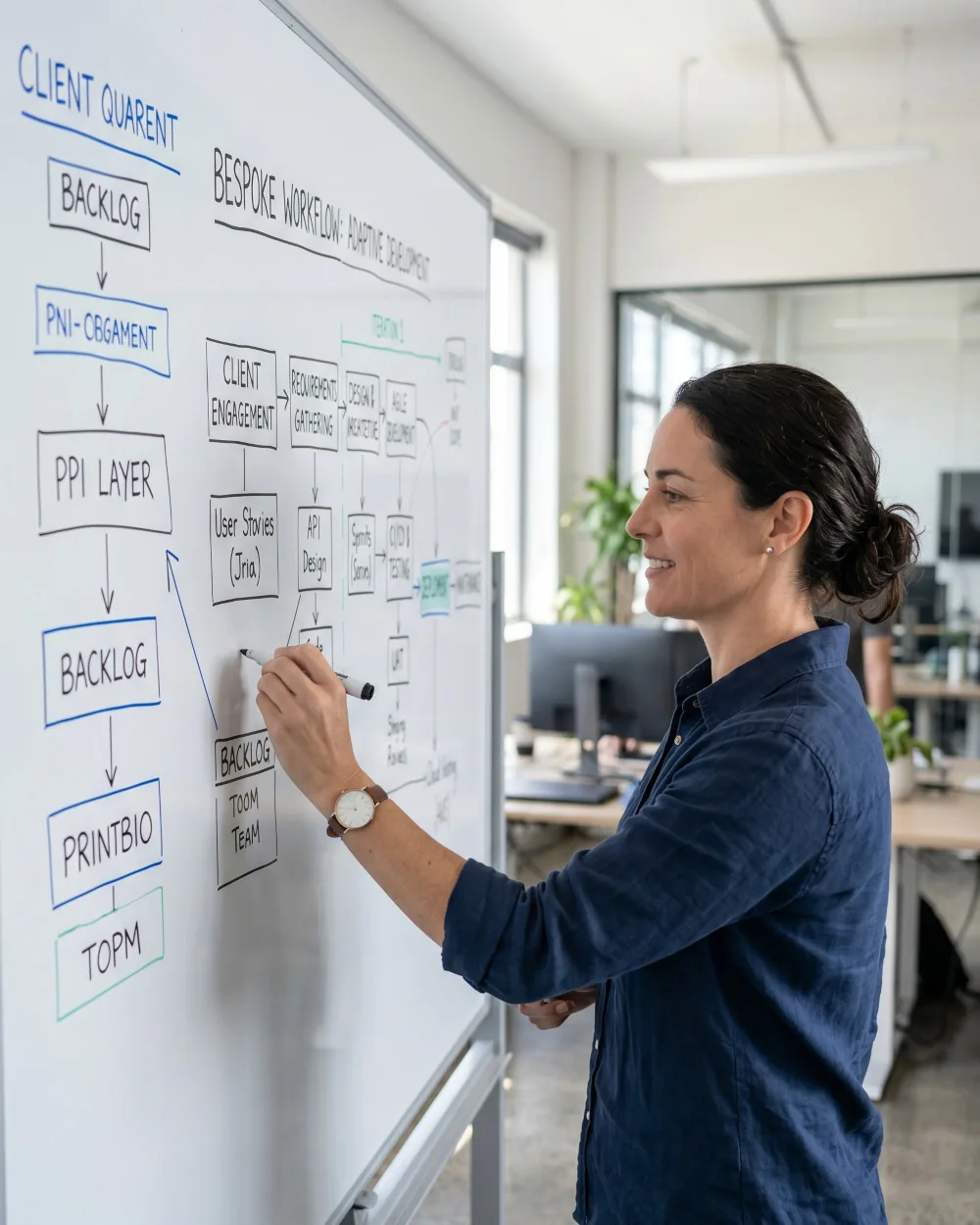
A software engineer at a whiteboard, diagramming an adaptive bespoke workflow
fig. 03
[ photo · an engineer adapting software to your operation ]
How we think about it

The opposite of off-the-shelf.

Most software demands you reshape your operation to fit its assumptions. We invert that. You get a platform with most of your industry's problems already solved — a starting point built by our team in collaboration with an expert who's run an operation like yours. Then our software engineers adapt that platform to your operation, not the other way around. The way your team solves problems is the way the software solves them. Your insights about your business get codified. Your KPIs become first-class. Each solved problem stays solved — permanently.

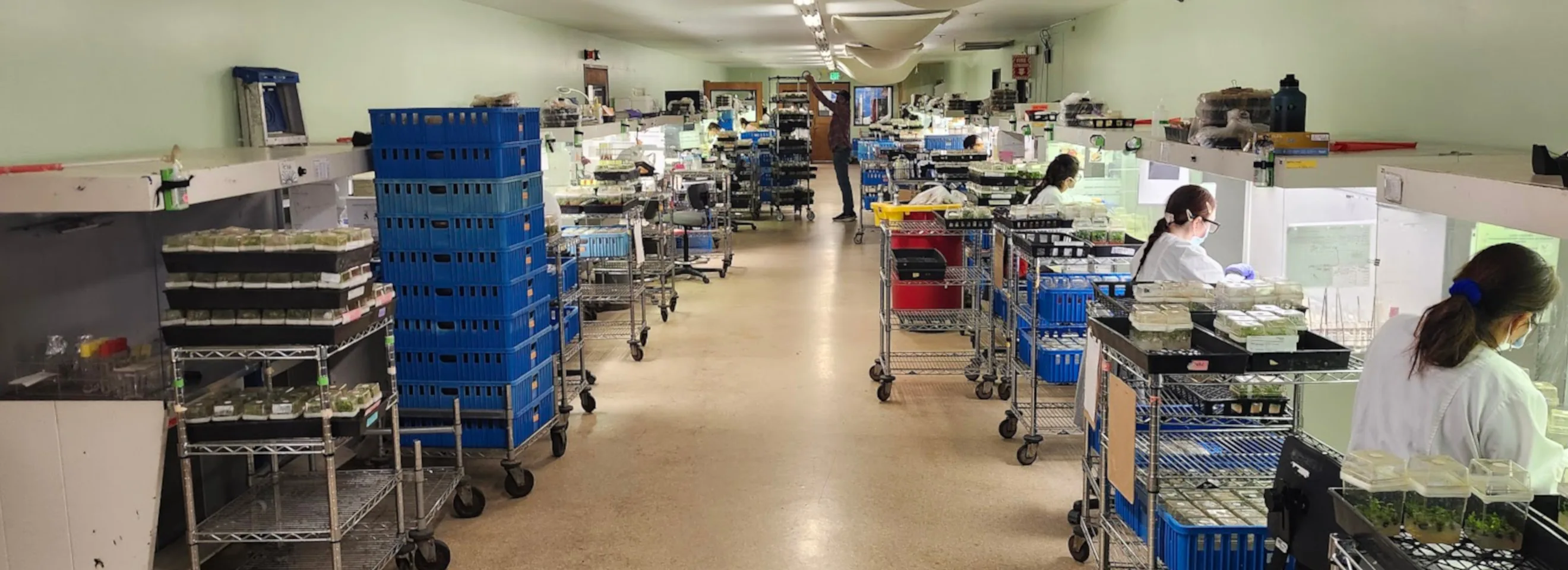
A wide view down a tissue culture lab aisle — racks of culture trays on the left, hood techs at workstations on the right
[ photo · every lab is different · the software, fitted to each ]
How it works

Six principles, your version.

01 Start with 80% solved. Your operation doesn't begin with a blank database. You start with a working instance — our platform pre-configured for your industry, built alongside experts who've operated systems like yours. The bench, the network, the workflow templates are already in place. Adaptation starts from a foundation, not from scratch.
02 The software bends to your operation. You don't build your operations around what the software allows. The software is reshaped around what your operation needs. Custom fields, custom workflows, custom dashboards, custom routing rules. If your team solves a problem a particular way, the software learns to solve it the same way.
03 Your insights, built in. Every time your team has a "we should track this" moment, our engineers turn it into a tracked field with a dashboard and an alert. Every time someone says "why is no one using X," we rework it. The software's behavior reflects what your team has learned about your operation — and the lessons compound.
04 Each problem solved once, solved forever. The problems your team solves repeatedly become software solutions. Solve a problem three times manually and we build it in — so the fourth time, it's a click. Decisions get codified. Workflows get automated. What was tribal knowledge becomes durable infrastructure that doesn't leave when staff do.
05 Custom integrations with the rest of your stack. Your lab doesn't operate alone. Equipment, accounting systems, ERPs, label printers, scales, environmental sensors — our engineers wire them into the platform so the data flows where it needs to go. Specific to your hardware, your vendors, your environment.
06 Engineers who know your industry. The engineers writing your custom features aren't generic devs picking up a domain on the fly. They know what a multiplication rate is, what a hood cycle costs, what a contamination spike looks like in your data. Your subscription's engineering hours go to features specific to your operation, not generic onboarding.
Plus the team

A software engineer on your team.

Your subscription includes allocated hours of a software engineer who knows the platform and learns your operation. They write the integrations, build the custom dashboards, fix the workflows that aren't working, and translate your team's "we should track that" moments into shipped features. Because the platform is already configured for your industry, the engineer's hours go to what's specific to your operation — not generic onboarding. The result is a system that's yours, built around your work, evolving as your operation does.

The one-line version

Software built around you.
Not the other way around.

Talk to us about what your operation actually needs.

Talk to us

How we engage

We start with a 30‑minute conversation about your operation. If we're a fit, we visit; if we're not, we'll point you to someone who is.